
Summer 2026 Planting in Full Swing Despite Ebola Disruptions - #24
Hello friends!
Facing unique challenges this year, Ski Club Uganda continues the fight against Nyamwamba River flooding, with an aim to plant 8000 seedlings this year.
“There is no situation we have not dealt with,” remarks Brian, local RTS leader of tree planting operations. As the Bundibugyo Virus (Ebola) struck the DRC this May, European and US volunteers faced international travel restrictions.
Dr. Sarah Ivory of Penn State University, enthusiastic about rejoining efforts with Dr. Bob Nakileza of Makerere University, expressed her dismay at the college travel board’s decision. “I am very upset about this and have been trying to fight it, but they are concerned that none of us will be able to enter the US when we return if we travel.” Ski Club Ugunda was particularly excited about this year’s sociological researcher that would join to link the ecological findings with ethnographic and cultural insights.
Despite these challenges, Dr. Bob and Brian are leading tree planting onsite, accompanied by dozens of graduate students from Makerere University. This year, they are staying in Kilembe instead of Kasese. “That way, we can feel closer to the action.” This isn’t the first time Ski Club Uganda has improvised in the face of challenges.
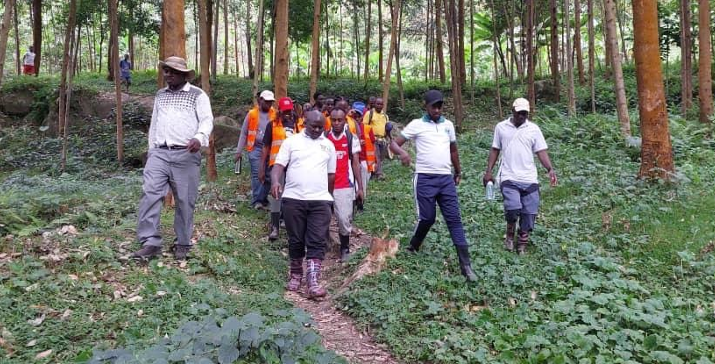
Makerere students, in their signature orange vests, get ready for planting bamboo (above/left).
“I think this year, we need to re-shift focus from school visits to directly involving students in the planting,” noted Max, leader of school involvement. “We’ll have to postpone the school activities, like the interactive play, for our next visit.” That doesn’t mean this year’s youngsters will sit on the sidelines. In addition to continuing tree planting, this year’s trip aims to integrate Kilembe’s schoolchildren directly.
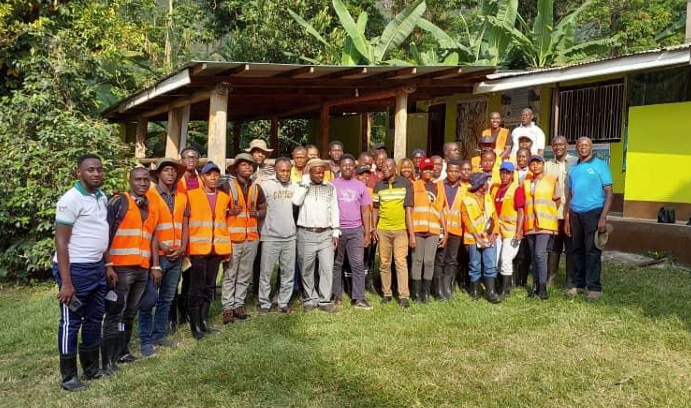
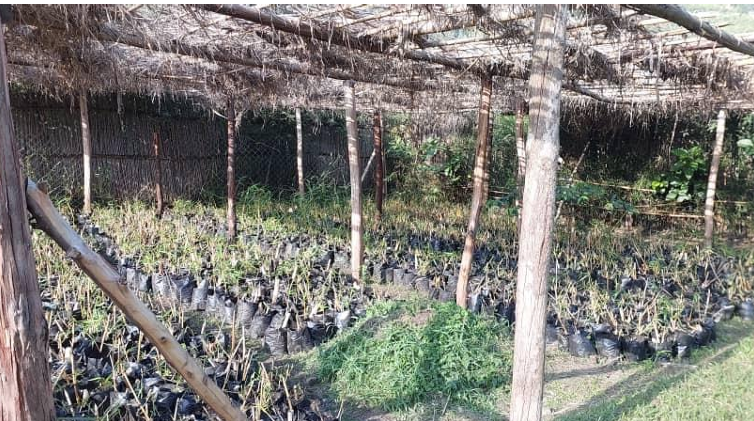
This year’s Ugandan team poses at Rwenzori Trekking Services, Kilembe (above/right) and the bamboo nursery (below).
Another idea originally set in motion by lead innovator Domagoj plans to offer a movie night for the community. According to the operations team, that night would be funded directly with donations. Donors have been generous these past months, including our first merch sale donation.
But before we get ahead of ourselves, let’s talk about trees. Last year, we successfully logged 1388 plants, the majority Grevillea. “I know we all spelled Grevillea differently last year,” SCU president and co-founder Florian chuckles, “But we need to ensure that this year, 8000 trees are logged correctly.”
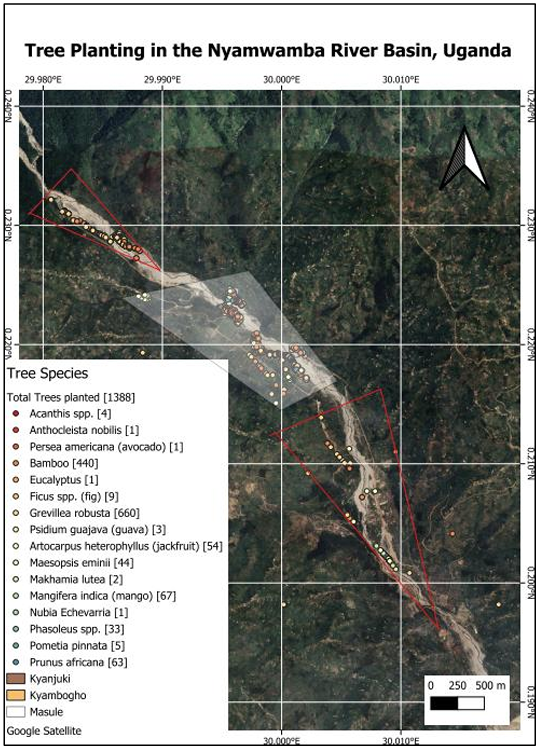
Last year’s tree planting efforts were logged and mapped. This year will be an opportunity to improve logging accuracy (above/right).
The shovels and picks have officially began digging, and this year, the focus is bamboo. With its fast and adaptive root systems, it’s the best shot at taming the Nyamwamba.
But planting 8000 trees in 2 weeks is unlikely, so we will need everyone in the community to get involved. “Long term, we may need to hire some designated planters,” commented Brian, who knows the challenges of logistically performing that feat. “The good thing is that planting across the fall months will take advantage of rainy season.”
The team of students on site, led by Dr. Bob, will not only plant trees but also perform community interviews and scientific research. Meanwhile, those who had to stay home are watching eagerly as the pictures come flooding in, supporting communications and international marketing. To encourage those who had to stay home, Dr. Bob insisted, “Please share. It helps when others know our actions and stories in the mountains.”
Apart from our monthly newsletters and blogs, the team will be posting daily updates on our social media platforms, sharing the progress of Dr. Bob, his students, the RTS team, and local volunteers.
Thank you all for sticking around and supporting us through every step of the way.
— Ski Club Uganda
